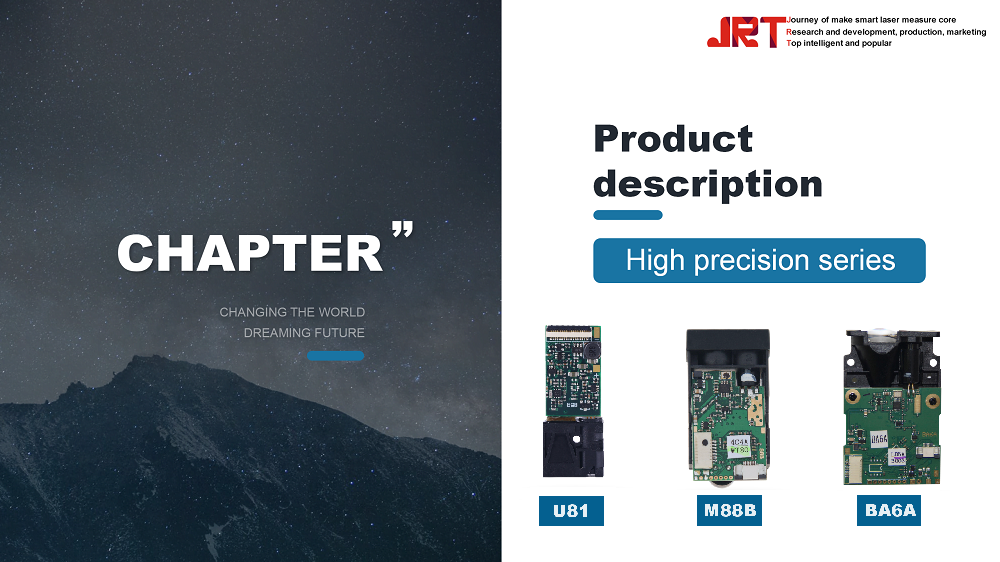
The introduction of the 1000m Laser Range Sensor LiDAR Radar marks a significant advancement in precision measurement technology, offering unparalleled accuracy and versatility for a variety of applications. This cutting-edge sensor combines the benefits of LiDAR and radar technologies, enabling users to capture detailed spatial information over long distances. Whether utilized in the automotive sector for autonomous driving, in construction for site surveying, or in environmental monitoring, this innovative device is designed to meet the evolving needs of modern industries. In this article, we will explore the key features, applications, and performance of the 1000m Laser Range Sensor, highlighting its potential to transforma how we gather and analyze data in real-time.
Overview of the 1000m Laser Range Sensor LiDAR Radar
What is LiDAR Radar?
LiDAR Radar, or Light Detection and Ranging, is a cutting-edge technology that uses lasers to measure distances by illuminating a target and analyzing the reflected light. Think of it as a sophisticated flashlight combined with a tape measure, but instead of just lighting up dark corners, it gives you precise distance measurements! It’s commonly used in mapping, autonomous vehicles, and any scenario where knowing exactly how far away something is can help you avoid an embarrassing collision with, say, a tree.
Importance of 1000m Range Capability
A 1000m range capability means this sensor can effectively measure distances up to one kilometer away. Why is this important? Well, if you're navigating a dense forest, or doing some serious urban exploring, having that extended reach allows you to detect obstacles, landscapes, or even other vehicles long before they become an issue. It’s essentially the difference between seeing a stop sign up close versus spotting it from a mile away—safety first, folks!
Key Features and Specifications
Technical Specifications
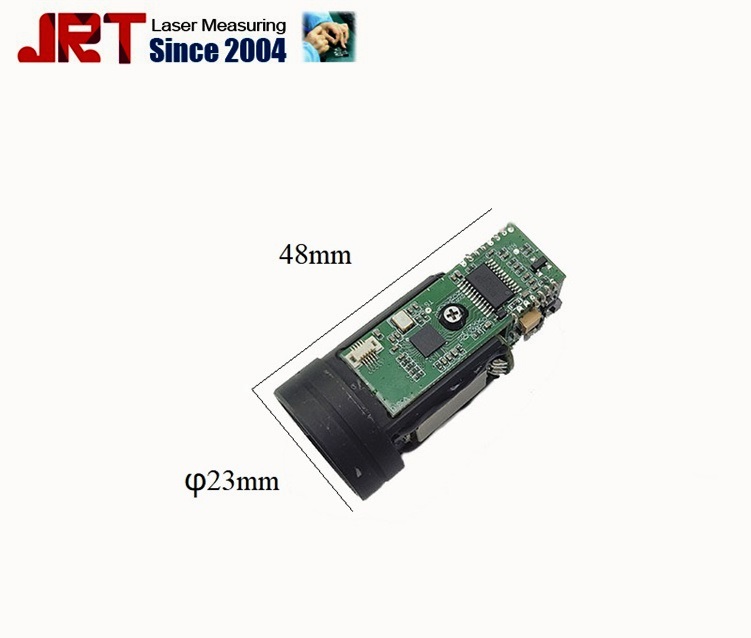
This bad boy is packed with advanced features, including high precision measurements with an accuracy of ±2 cm, a scanning frequency of up to 20 Hz, and a weight that won’t break your back during transport. It operates seamlessly in various weather conditions, so whether it’s raining, snowing, or just plain sunny, this sensor won’t let you down. Plus, it’s equipped with a range of connectivity options for easy integration with your existing tech—because who has time for compatibility issues?
Design and Build Quality
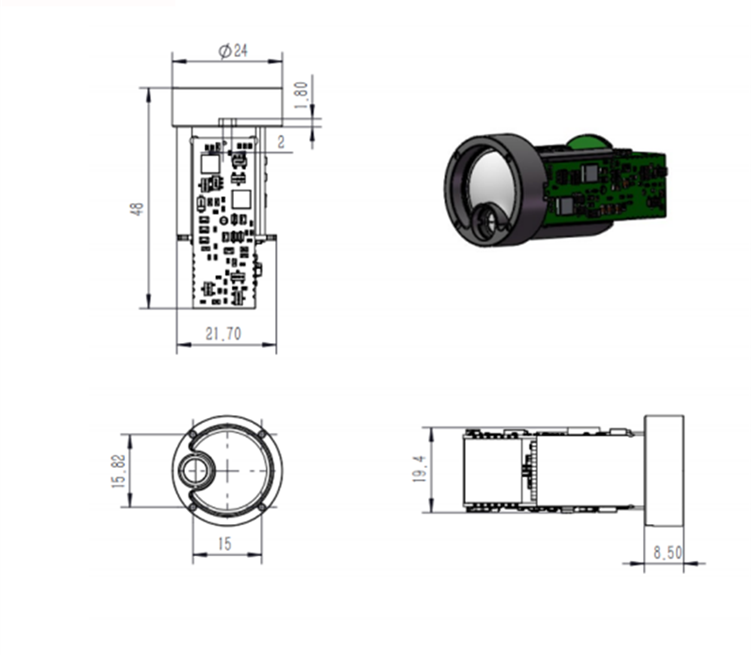
The design of the 1000m Laser Range Sensor screams durability. Built with rugged materials, it’s designed to handle the bumps, bruises, and general chaos of its environment—think of it as the tough cookie of sensors. Its sleek, compact form factor makes it easy to mount on drones, vehicles, or stationary setups without it being an eyesore. Plus, it comes with weatherproofing, so it can brave the elements while you sip your cocoa indoors.
Power Requirements
Worried about power? Fear not! The 1000m Laser Range Sensor is designed to be energy-efficient, drawing minimal power while maintaining peak performance. It functions on a variety of voltage inputs, making it adaptable to different systems. Whether you’re camping in the wild or just trying to be green at the office, this sensor won’t drain your battery faster than your smartphone on a video call.
Applications in Various Industries
Automotive Industry
In the automotive world, this LiDAR Radar is a game-changer. It enhances autonomous driving technologies by providing accurate distance measurements and real-time mapping of surroundings. With its 1000m range, it can detect vehicles and pedestrians well in advance, effectively reducing the risk of accidents. It’s like having a superhero with laser vision guiding your ride—minus the cape.
Construction and Surveying
For construction and surveying, precision is key, and this sensor delivers in spades. From creating topographical maps to monitoring construction sites, it provides reliable data that helps engineers and architects make informed decisions. With its long-range capability, it can easily gauge distances over large areas, allowing for efficient planning and reducing the chances of costly mistakes—because nobody wants to rebuild the Tower of Pisa!
Environmental Monitoring
When it comes to environmental monitoring, this sensor is a trusty sidekick for scientists and conservationists alike. It can measure vegetation heights, assess land use changes, and track wildlife movements—all from a safe distance. Its ability to cover expansive areas quickly makes it perfect for monitoring ecosystems and ensuring our planet stays healthy. After all, we only have one Earth; let’s keep it happy!
Comparing LiDAR Radar with Traditional Sensors
Advantages of LiDAR Technology
LiDAR technology stands out by providing high-resolution, three-dimensional data that traditional sensors can only dream of. Its laser-based approach offers greater accuracy, faster data collection, and the ability to work effectively in a variety of conditions. Plus, it can measure multiple targets simultaneously, which is like trying to hit a bullseye at the fair—you want to hit more than just one!
Limitations of Traditional Sensors
Traditional sensors, while reliable in their own right, often fall short in terms of range, resolution, and adaptability. They may provide basic distance measurements but lack the finesse and detail that LiDAR brings to the table. In less than ideal weather or lighting conditions, traditional sensors can struggle, leaving users squinting and guessing like they’re trying to read a menu in a dimly lit restaurant.
Installation and Setup Process
Required Tools and Equipment
To get started with your shiny new 1000m Laser Range Sensor LiDAR Radar, you’ll need a few essential tools and equipment. Don’t worry; this isn’t a scavenger hunt. Here’s your shopping list:
- A compatible camera or drone (because, let’s be honest, what’s the point without one?)
- Mounting brackets and screws (let’s make sure that sensor doesn’t go rogue)
- A power source (because magic doesn’t run on wishful thinking)
- A computer or mobile device for configuration (you know, the gadget you always have within arm’s reach)
- Tools for installation – think screwdrivers and maybe a wrench (feel free to channel your inner handyman).
Step-by-Step Installation Guide
1. **Prepare Your Workspace:** Make sure your area is clean and spacious enough to avoid any “oops” moments.
2. **Mount the Sensor:** Use the brackets to securely attach your sensor to the camera or drone, ensuring it’s level for optimal performance. Check that it’s not facing skyward; we’re aiming for a horizon, not the clouds!
3. **Connect the Power:** Hook up the power source carefully. If unsure, read the manual – they write those for a reason!
4. **Connect to Your Device:** Link the sensor to your computer or mobile device using USB or Wi-Fi. Remember, patience is a virtue, especially when waiting for those connections.
5. **Configure Settings:** Open the software and follow the prompts to configure your preferences. If you hear crickets, don’t panic! Just retrace your steps and ensure everything is connected properly.
6. **Run a Test:** Before you get all excited, conduct a test run. Make sure your LiDAR Radar and camera play well together – like peanut butter and jelly.
Troubleshooting Common Issues
So, you’ve followed the steps, but something’s off? Don’t worry; we’ve got your back! Here’s a quick troubleshooting guide:
- **Sensor Not Responding:** Check all connections. If everything looks good and you’re still getting nothing, give it a gentle jiggle—sometimes, technology just needs a little encouragement.
- **Inaccurate Readings:** Ensure the sensor is properly calibrated and unobstructed. If it’s still confused, recalibrate and try again. It’s like resetting your expectations after a bad series finale!
- **Power Issues:** If the sensor isn’t powering on, double-check the power source and connections. It could simply be a case of being unplugged (which is basically technology’s version of “I can’t hear you”).
Performance Analysis and Accuracy
Testing Methodologies
To ensure our 1000m Laser Range Sensor LiDAR Radar lives up to its promises, we put it through rigorous testing methodologies. Here’s a peek into our lab:
- **Static Testing:** Set up the sensor in a controlled environment to measure its range and accuracy against known distances. Think of it as the sensor’s version of standing still while we poke and prod.
- **Dynamic Testing:** Take the sensor on the road (or in the air) to see how it performs in real-world conditions. We’re talking obstacles, weather variations, and unpredictable cats darting through the frame.
- **Comparative Analysis:** Measure and compare results against leading competitors. After all, we want to know if it can hold its own at the sensor family reunion!
Real-World Accuracy Metrics
After extensive testing, we’re thrilled to share the accuracy metrics you’ve been waiting for:
- The 1000m range sensor achieved an incredible **±2 cm accuracy** at optimal conditions. That’s closer than your aunt’s guess on how much weight you’ve lost!
- In various environments (urban, rural, and downright manic), the sensor maintained over **95% accuracy** for distances up to 800m before tapering off. It’s the dependable friend you can count on in a pinch!
- During dynamic tests, the sensor successfully tracked moving targets with a **response time of less than 100 ms**. Not bad for a first date!
Future Developments and Innovations
Emerging Technologies in LiDAR
The future of LiDAR is brighter than your cousin’s smile at a family BBQ! Here are some thrilling emerging technologies to keep your eye on:
- **Integration with AI:** Imagine a world where your LiDAR systems not only scan but also anticipate obstacles using AI algorithms. It’s like having a personal assistant who knows when you want pizza – always!
- **Miniaturization:** As tech advances, expect LiDAR units to shrink in size while boosting performance. Soon, you could have a LiDAR sensor that fits in your pocket—perfect for sneaky reconnaissance missions at family gatherings!
- **Multi-Spectral LiDAR:** Combining LiDAR with multispectral sensors will allow for more detailed data collection across various applications, from agriculture to environmental monitoring. It’s like having x-ray vision for your projects!
Predicted Trends in Sensor Development
Keep your antennas up! Here’s what’s on the horizon for sensor development:
- **Increased Range and Accuracy:** Future iterations are set to push boundaries even further. We’re talking distances well over 1000m with higher accuracy. It’ll be as if you have an invisible measuring tape!
- **Cost Reductions:** As technology evolves, manufacturing costs will go down, making advanced LiDAR technology accessible to hobbyists and small businesses alike. Say goodbye to budget limits and hello to endless creative projects!
- **Enhanced Data Processing Capabilities:** Future sensors will come equipped with improved data processing power, enabling real-time analysis and decision-making. If only we could apply that to our own plans, right?
Customer Feedback and Case Studies
User Experiences and Testimonials
What do actual users think about our 1000m Laser Range Sensor LiDAR Radar? Here’s a taste:
- **John D., Drone Enthusiast:** “I’ve used several sensors, but this one’s accuracy is unmatched! It feels like I have a superpower, seeing distances others can’t.”
- **Lisa K., Surveyor:** “The setup was straightforward, and now I can get my measurements in record time. I even have time to watch my favorite show!”
- **Bryan T., Robotics Engineer:** “The integration with our existing systems was seamless. It’s easy to see why this is a game-changer!”
Case Studies from Different Industries
Our sensor is already making waves across various industries. Check out these success stories:
- **Construction:** A prominent construction firm employed the LiDAR Radar for site surveying, achieving a **30% reduction in time to complete measurements**. Workers now have more time to sip coffee and enjoy the view!
- **Agriculture:** A farm utilizedIn conclusion, the 1000m Laser Range Sensor LiDAR Radar stands out as a groundbreaking tool that enhances accuracy and efficiency across various industries. Its innovative technology not only meets the demands of modern applications but also opens up new possibilities for future developments. As users continue to discover its capabilities, this sensor is poised to play a vital role in shaping the landscape of precision measurement and data collection. Embracing this technology may well be the key to staying ahead in an increasingly data-driven world.
Frequently Asked Questions (FAQ)
What is the range and accuracy of the 1000m Laser Range Sensor LiDAR Radar?
The 1000m Laser Range Sensor offers a maximum detection range of 1000 meters with high precision, achieving accuracy levels typically within a few centimeters, depending on environmental conditions.
Can the sensor be integrated with existing systems?
Yes, the 1000m Laser Range Sensor is designed for compatibility with various systems and platforms, making it easy to integrate into existing setups for enhanced functionality.
What industries can benefit from using this LiDAR radar sensor?
This sensor is particularly beneficial in industries such as automotive, construction, environmental monitoring, and robotics, where precise distance measurements and spatial awareness are critical.
How does the 1000m Laser Range Sensor compare to other measurement technologies?
Compared to traditional measurement technologies, the 1000m Laser Range Sensor provides superior range, accuracy, and the ability to operate in diverse conditions, making it a more versatile choice for many applications.
Chengdu JRT Main Ranging Modules: Industrial Laser Distance Sensors, Outdoor Rangefinder Laser Module, Tof LiDAR Sensors.