As the drone industry continues to evolve, the introduction of cutting-edge technologies is paving the way for more efficient and versatile applications. One such innovation is the 1200m eye-safe laser rangefinder sensor, designed to enhance the operational capabilities of drones while ensuring safety and compliance. This article delves into the features and specifications of this advanced sensor, exploring its applications across various sectors, the benefits of its eye-safe technology, and its seamless integration with UART communication protocols. By examining the advantages it offers over traditional rangefinding solutions, we can gain insights into the future of laser rangefinder technology in drone operations and its potential impact on the market by 2026.
Overview of the 1200m Eye-safe Laser Rangefinder Sensor
What is a Laser Rangefinder Sensor?
A laser rangefinder sensor is a nifty gadget that measures distances by using laser beams. Essentially, it sends out a laser pulse, which then bounces back after hitting an object, allowing the sensor to calculate the distance with impressive accuracy. Think of it as a super accurate measuring tape that can reach far beyond your arm's length—without the hassle of tangles or accidentally stepping on it.
Importance of Eye-safe Technology
Eye-safe technology in laser rangefinders is like wearing sunscreen on a sunny day—absolutely essential! These sensors emit laser beams that are safe for human eyes, reducing the risk of injury during operations. In a world where drone operators are often working alongside bystanders or in urban environments, eye-safe lasers ensure that everyone can keep their eyes on the skies without squinting in fear of accidental laser encounters.
Key Features and Specifications
Measurement Range and Accuracy
With an impressive measurement range of up to 1200 meters, this sensor doesn’t just stretch its legs; it does so with pinpoint accuracy. Whether you’re scanning a distant mountain or a field of crops, expect measurements to be as precise as a gymnast on the balance beam—no wobbles here!
Operating Conditions and Environmental Resilience
Designed for the great outdoors (or whatever less-than-perfect conditions Mother Nature throws your way), this sensor thrives in harsh environments. It’s built to resist rain, dust, and even a little mud-slinging—so whether you’re flying in sunny skies or under a gloomy overcast, your rangefinder won’t shy away from the challenge.
Size and Weight Considerations
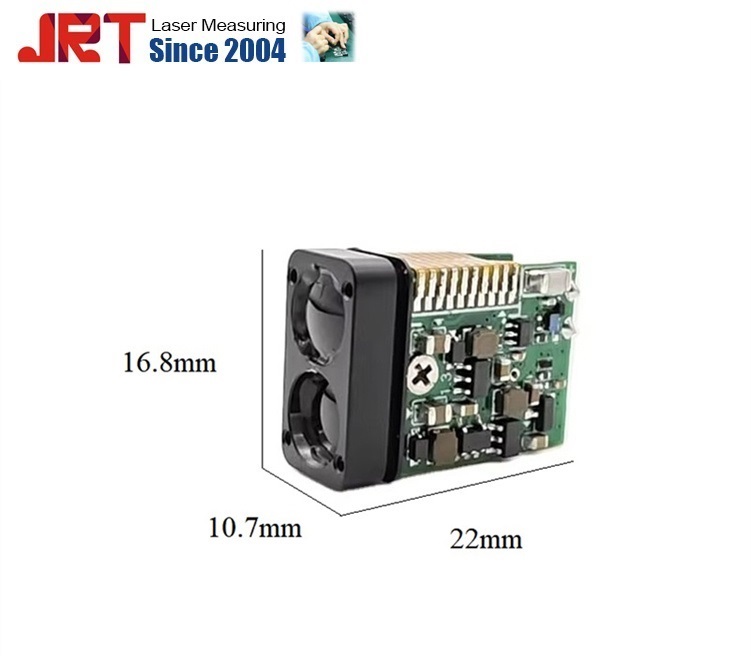
Weighing in with a compact design, this laser rangefinder sensor is light as a feather—perfect for drones that need to maintain aerial agility. It easily fits into your drone’s payload without turning it into a clunky sky giant, ensuring that your drone can not only fly fast but also carry the essentials needed for its missions.
Applications of Laser Rangefinder Sensors in Drones
Surveying and Mapping
When it comes to surveying and mapping, this sensor is like having a trusty sidekick that never quits. It enables drones to gather accurate geographic data quickly and efficiently, which is a game-changer for land surveyors and urban planners. With precision mapping at their fingertips, they can create detailed topographical maps that would impress even the most seasoned cartographer.
Search and Rescue Operations
In the heart of chaos during search and rescue operations, this laser rangefinder sensor shines bright. It helps identify distances to objects or individuals in challenging terrains, guiding rescue teams with accuracy. Every second counts, and with this tech in their arsenal, rescuers can respond faster, ultimately saving lives when it matters most.
Agricultural Monitoring and Management
Farmers, rejoice! The 1200m eye-safe laser rangefinder sensor becomes your agricultural best friend, enabling precise land contour mapping, crop health assessments, and irrigation management. By using drones equipped with this sensor, farmers can monitor their fields more efficiently than ever, leading to better yields and a higher return on investment.
Benefits of Eye-safe Technology in Laser Sensors
Safety for Human Operators and Bystanders
The eye-safe feature not only protects those operating the drones but also ensures the safety of innocent bystanders. Whether you’re in a bustling city or a quiet rural area, knowing the laser won’t inadvertently zap anyone’s retinas is an incredible peace of mind. Safety first, fun second!
Regulatory Compliance and Market Acceptance
In today’s regulatory landscape, eye-safe technology is like wearing a “please don’t ground me” badge. Complying with safety standards helps ensure that your drone operations are not only legitimate but also widely accepted in the market. This builds trust with clients and stakeholders, paving the way for broader adoption and use of this innovative technology in various industries.
Integration with UART Communication Protocol
Understanding UART Basics
Universal Asynchronous Receiver/Transmitter (UART) is like the friendly neighborhood postman of the communication world—it ensures data gets from point A to point B without breaking a sweat. Basically, it handles serial communication between devices using just two wires: one for transmitting and another for receiving. This simplicity makes it a go-to choice for low-cost and low-power applications, like our snazzy 1200m eye-safe laser rangefinder sensor in drones. Picture it as your drone's chatty sidekick, sending and receiving vital information with ease.
Benefits of UART in Drone Applications
Why choose UART for your drone's communication needs? For starters, it’s straightforward—no extra bells and whistles! This not only keeps costs down but also reduces the likelihood of connection hiccups. Plus, the magic of UART lies in its versatility; it can seamlessly mesh with various microcontrollers and other components, making integration a breeze. As your drone zips around measuring distances, UART ensures that all the cool data gets delivered without drama, allowing for quick reactions and enhanced performance. Who knew a little wire could pack such a punch?
Comparison with Traditional Rangefinding Solutions
Cost-Effectiveness
When it comes to the budget, traditional rangefinding solutions can feel like that friend who always insists on ordering the fancy cocktails. Meanwhile, our 1200m eye-safe laser rangefinder sensor is more like a reliable lemonade—refreshingly effective without breaking the bank. With lower manufacturing costs, less complexity, and reduced component requirements, this new sensor offers an affordable yet high-performance option that won’t make your wallet cry. Perfect for both hobbyists and professionals looking to get more bang for their buck!
Performance Metrics
In the race for rangefinding supremacy, performance metrics are the finish line. Our 1200m sensor doesn’t just jog along; it sprints! While traditional systems might wobble like a toddler learning to walk, this laser rangefinder boasts accuracy that can make even a seasoned mathematician blush. With improved distance measurement, faster response times, and incredible precision—think of it as upgrading from a dial-up internet connection to fiber optics. Who wouldn’t want that kind of performance difference in their drone?
Ease of Integration and Use
Trying to integrate traditional rangefinders can feel like fitting a square peg in a round hole—frustrating and often unsuccessful. Enter our laser rangefinder sensor, which is more like that perfect puzzle piece that just clicks! Thanks to its UART compatibility, installation is as easy as pie. If you can plug in a charger, you can set this bad boy up. You can spend less time wrestling with wires and more time perfecting your drone maneuvers. Now that’s a win-win!
Future Trends in Laser Rangefinder Technology for Drones
Advancements in Sensor Technology
The future of laser rangefinder technology is as bright as a freshly polished drone! Expect smarter sensors that can adapt to different conditions—think weather-proofing that turns rainy days into play days. Advances in AI and machine learning will likely allow rangefinders to not just measure distances, but also recognize obstacles and optimize flight paths. It’s like giving your drone a Ph.D. in spatial awareness, making it a more intuitive flying buddy than ever before.
Market Predictions and Innovations
Hold onto your propellers because the market for drone rangefinders is set to soar! By 2026, we can expect an avalanche of innovations, with more manufacturers jumping on the laser bandwagon. As industries from agriculture to filmmaking realize the advantages of these sensors, the competition will drive prices down even further while upping the ante on performance. Imagine seeing drones that can measure distances accurately while avoiding birds, trees, and the occasional “Oops, almost flew into that building!” moment. The sky really is the limit!
Conclusion and Market Outlook for 2026
Summary of Key Insights
In summary, the 1200m eye-safe laser rangefinder sensor for drones is a game-changer! With its UART integration, cost-effectiveness, superior performance, and ease of use, it's set to outperform traditional rangefinding solutions. The future is bright, with advancements in technology promising even better capabilities and innovations on the horizon, making it a stellar time to get involved in the drone market.
Final Thoughts on Industry Impact
As we gaze into our crystal ball for 2026, it’s clear that the drone industry is gearing up for an exhilarating ride. The rise of advanced laser rangefinding technology will revolutionize not just how drones navigate, but also how industries function as a whole. From smarter agricultural practices to enhanced delivery services, this little sensor will play a big role. Buckle up, because the sky is about to get a whole lot busier—and safer—thanks to these revolutionary advancements!In conclusion, the 1200m eye-safe laser rangefinder sensor represents a significant advancement in drone technology, offering enhanced safety, accuracy, and versatility for a wide range of applications. As the demand for innovative solutions in industries such as surveying, agriculture, and search and rescue grows, this sensor is poised to play a crucial role in shaping the future of drone operations. By embracing these advancements, stakeholders can unlock new opportunities and drive further innovation in the field, ensuring that drones remain at the forefront of technological progress in the years to come.
Frequently Asked Questions
What is an eye-safe laser rangefinder sensor?
An eye-safe laser rangefinder sensor is a device that measures distances using laser technology while ensuring that the emitted laser light is safe for human eyes, reducing the risk of injury during operation.
How does the 1200m range benefit drone operations?
The 1200m measurement range allows drones to operate effectively over longer distances, making them suitable for applications such as surveying, mapping, and search and rescue where accurate distance measurements are essential.
What advantages does UART communication provide in drone sensors?
UART communication offers simplicity and reliability in data transmission between the laser rangefinder sensor and the drone's control system, facilitating real-time data processing and efficient integration with other onboard systems.
Are there specific industries that can benefit the most from this technology?
Yes, industries such as agriculture, construction, environmental monitoring, and emergency services can significantly benefit from the capabilities of eye-safe laser rangefinder sensors, enhancing their operational efficiency and safety protocols.
Chengdu JRT Main Ranging Modules: Industrial Laser Distance Sensors, Outdoor Rangefinder Laser Module, Tof LiDAR Sensors.