The 270° Time-of-Flight (ToF) Sensor 3D LiDAR Scanner represents a significant advancement in sensing technology, enabling precise, three-dimensional mapping of environments with a wide field of view. By utilizing the principles of time-of-flight measurement, this innovative scanner captures data with remarkable accuracy, making it ideal for various applications such as autonomous vehicles, robotics, and industrial automation. As industries increasingly adopt 3D LiDAR solutions to enhance navigation, object detection, and spatial analysis, understanding the capabilities, advantages, and future trends of the 270° ToF Sensor becomes essential for stakeholders seeking to leverage this cutting-edge technology.
Overview of 270° ToF Sensor 3D LiDAR Technology
What is 3D LiDAR?
3D LiDAR, short for Light Detection and Ranging, is like the superhero of the scanning world. It uses laser beams to create a detailed 3D map of its surroundings. By measuring the time it takes for the laser to bounce back from objects, it generates high-resolution point clouds, giving us a better view of the landscape—both literally and figuratively!
The Principle of Time-of-Flight (ToF) Measurement
At the heart of this technology is the Time-of-Flight principle. Imagine throwing a ball and timing how long it takes to hit a wall and bounce back. That’s what ToF does, but with laser light instead of a ball. By calculating the time it takes for a pulse of light to travel to an object and back, the sensor can determine the distance to that object. Quick and efficient, it’s like using an echo to map out your surroundings but way cooler.
Understanding the 270° Field of View
Now, picture trying to see everything around you without turning your head. That’s what a 270° field of view offers! This wide perspective allows the sensor to capture more data in one sweep than those narrow-angled counterparts. It’s ideal for mapping expansive areas while minimizing blind spots. No more peeking around corners—this sensor has your back!
Key Features and Specifications
1> Resolution and Accuracy
The 270° ToF sensor boasts impressive resolution and accuracy, capturing intricate details with pinpoint precision. This ensures that whether you're scanning a crowded urban environment or intricate machinery, every nook and cranny is accounted for. Think of it as giving your data glasses to see the world in high definition!
2> Scanning Rate and Distance
With a fast scanning rate, this sensor can capture multiple data points per second while covering a considerable distance. It can efficiently map large areas, making it a go-to for applications that require real-time data. If you had a dollar for every time this sensor outperformed traditional systems, you’d probably be able to buy a small island!
3> Power Consumption and Size
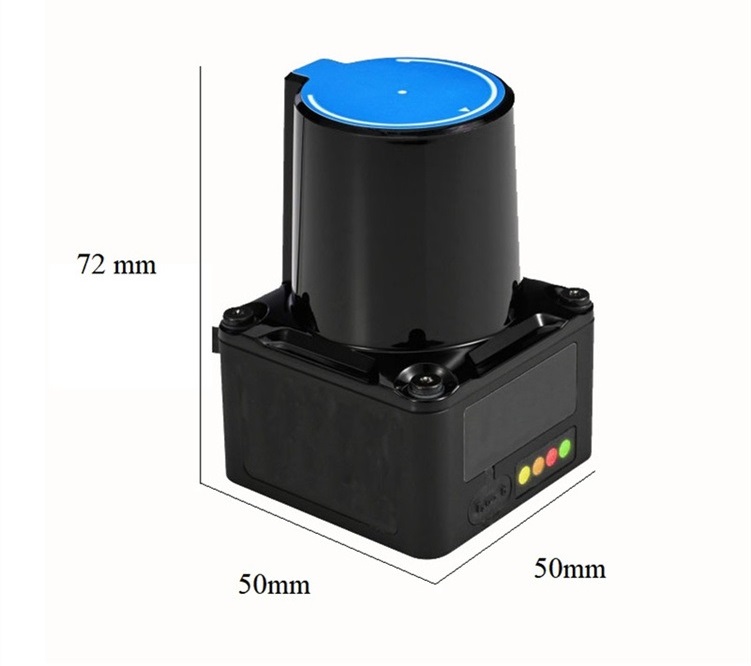
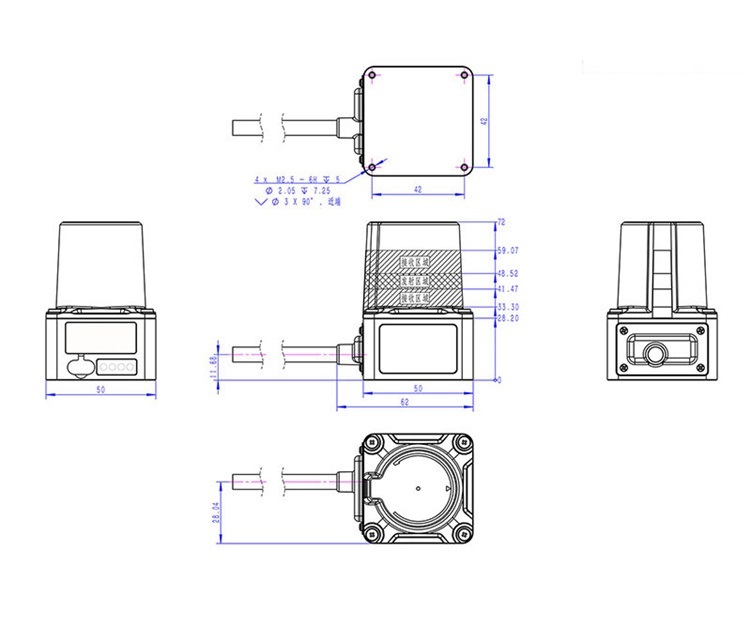
Forget bulky and power-hungry gadgets—this sensor is designed to be compact and efficient. With low power consumption, it can run for extended periods without draining the battery, making it perfect for mobile applications. Consider it the fitness guru of LiDAR scanners: small but packed with power!
Applications of 270° ToF Sensor LiDAR
Autonomous Vehicles
In the race towards self-driving cars, the 270° ToF sensor is like the trusty sidekick that never misses a beat. It helps vehicles understand their surroundings, detect obstacles, and navigate safely. Talk about taking the wheel without actually taking the wheel!
Robotics and Drones
Robots and drones are evolving, and the 270° ToF sensor is leading the charge. Its ability to scan large areas in real time allows drones to map landscapes efficiently and robots to navigate complex environments. It’s like giving them a sixth sense, minus the haunting soundtrack.
Industrial Automation
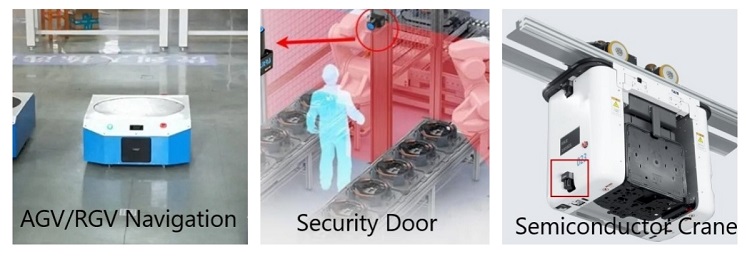
In factories, where precision and efficiency are king, the 270° ToF sensor contributes by improving automation processes. It helps in inventory management, ensuring the right items are in the right place, all while keeping an eye on safety. Think of it as the diligent warehouse manager that never takes a coffee break!
Mapping and Surveying
When it comes to mapping and surveying, this sensor shines like a beacon of light. Its rapid data collection capabilities allow surveyors and geographers to create accurate topographical maps, ensuring that every detail is captured. Who knew mapping could be so exhilarating?
Advantages of Using 270° ToF Sensor 3D LiDAR
Wide Field of View Benefits
With its generous 270° field of view, this sensor reduces the need for multiple scans and offers comprehensive data with impressive coverage. It’s like having an all-seeing eye, making it easier to spot what others might miss. No more playing hide and seek with your data!
Speed and Efficiency in Data Collection
Time is money, and this sensor saves both. With quick scanning capabilities, it collects data at a rapid pace, allowing users to deploy LiDAR technology without the headache of long wait times. Speedy data collection means faster decision-making—no more twiddling those thumbs!
Improved Depth Perception and Object Detection
The combination of ToF measurement and a wide field of view means superior depth perception and enhanced object detection. It can distinguish between objects more effectively, enabling applications that require high levels of accuracy—no more guessing games when it comes to what’s out there!
Comparison with Other LiDAR Technologies
2D vs. 3D LiDAR Scanners
When it comes to LiDAR scanners, the debate between 2D and 3D is like choosing between pizza and a taco—both are great, but they serve different purposes. 2D LiDAR focuses on horizontal mapping, capturing a flat image of the environment, while 3D LiDAR adds depth, offering a complete spatial understanding. The 270° ToF Sensor 3D LiDAR Scanner shines in this arena, providing detailed volumetric data essential for applications like autonomous vehicles and robotics, where you can’t just skate by on two dimensions!
Solid-State vs. Rotating LiDAR
Solid-state LiDAR is the reliable best friend that never lets you down, while rotating LiDAR is the glam celebrity with all the flair. Solid-state options have fewer moving parts, which makes them sturdy and compact, perfect for rough and tumble environments. On the other hand, rotating LiDAR offers a broader field of view and high-resolution scans, but at the cost of complexity. The 270° ToF Sensor, however, manages to straddle the line between the two, delivering the robustness of solid-state tech while still being versatile enough for dynamic applications.
Cost Factors and Performance Metrics
Ah, the eternal struggle of performance vs. price! The 270° ToF Sensor 3D LiDAR Scanner sits in a sweet spot where top-notch performance doesn’t mean you have to mortgage your house. Cost factors vary depending on the technology, with solid-state LiDAR generally being cheaper due to lower manufacturing costs. However, it’s crucial to measure performance metrics, such as range, accuracy, and data refresh rates, to fully appreciate the value of your investment. In the end, you want a tool that meets your needs without breaking the bank—or your spirit.
Implementation and Integration in Various Industries
Challenges in Integration
Bringing the 270° ToF Sensor 3D LiDAR Scanner into the fold can feel like trying to fit a square peg into a round hole—if the hole is surrounded by a bunch of other pegs. The primary challenges include integrating with existing systems, managing data overload, and ensuring compatibility with various software platforms. Sometimes, it’s like trying to teach a cat to fetch—requires patience, effort, and a treat or two (preferably not a laser pointer).
Case Studies of Successful Implementation
Real-world applications highlight the glorious triumphs of the humble LiDAR sensor. In construction, companies using the 270° ToF Sensor have made strides in project planning by accurately mapping terrain, leading to remarkable efficiency gains. Similarly, in agriculture, farmers leveraging this technology can monitor crop health and optimize irrigation processes as if they were casting a magic spell—only it’s data-driven brilliance, not wizardry.
Best Practices for Deployment
To deploy the 270° ToF Sensor 3D LiDAR successfully, remember the golden rules: start small, calibrate your sensors, and ensure proper training for your team. Think of it like baking a cake—you wouldn’t throw all the ingredients in at once and hope for the best! Gradual integration allows for troubleshooting along the way, and when your crew knows what they’re doing, the results will be delightfully scrumptious.
Future Trends in LiDAR Technology
Advancements in Sensor Technology
The future of sensor technology is sparkling brighter than a disco ball! Innovations like miniaturization, improved resolution, and enhanced range are making LiDAR more accessible and effective than ever. The 270° ToF Sensor is already riding this wave, continuously evolving to meet the demands of industries that want precision without the bulk—like a sleek new car zooming past gas guzzlers on the highway.
Emerging Applications and Use Cases
With great tech comes great responsibility—and opportunities! The versatility of the 270° ToF Sensor is paving the way for emerging applications in urban planning, disaster management, and even wildlife monitoring. Who knew that these sensors could help keep an eye on the majestic bison while simultaneously mapping urban terrains? Talk about multitasking on a grand scale!
Impact of AI and Machine Learning on LiDAR
Imagine a world where your LiDAR scanner not only collects data but also analyzes it as if it were Sherlock Holmes solving a mystery. That’s the impact of AI and machine learning on LiDAR technology! These advancements are enabling more efficient data processing, enhancing object detection accuracy, and making the 270° ToF Sensor smarter than your average bear. The future looks promising, and we’re all here for it!
Conclusion and Recommendations
Summary of Key Points
To recap: the 270° ToF Sensor 3D LiDAR Scanner is a game changer, offering unique advantages over other technologies. It balances precision, adaptability, and cost-effectiveness while making integration a feasible reality in various sectors. Whether it’s construction, agriculture, or urban planning, this scanner proves its worth time and again.
Future Considerations for Users
As you venture into the LiDAR world, keep your eyes peeled for continual advancements and don’t shy away from investing in training and best practices to maximize your investment. The future may hold surprises, and being prepared will help you ride the waves of innovation without wiping out.
Final Thoughts on 270° ToF Sensor LiDAR Technology
The 270° ToF Sensor is not just another gadget—it’s a revolutionary tool that’s shaping the way we perceive and interact with our environments. With the right deployment strategy and a little creativity, the possibilities are endless! So buckle up, embrace the change, and get ready to take your projects to new heights—preferably with a great view!In conclusion, the 270° ToF Sensor 3D LiDAR Scanner stands at the forefront of modern sensing technology, offering unparalleled precision and versatility across a range of applications. As industries continue to evolve and embrace advanced technologies, the insights gained from this innovative scanner can significantly enhance efficiency and accuracy. By staying informed about its features, benefits, and future developments, users can make strategic decisions that harness the full potential of 3D LiDAR technology for their specific needs.
Frequently Asked Questions (FAQ)
What distinguishes the 270° ToF Sensor from other LiDAR sensors?
The 270° ToF Sensor offers a wider field of view compared to many traditional LiDAR sensors, enabling it to capture more data in a single scan, which enhances efficiency and reduces the need for multiple measurements.
What types of applications can benefit from using the 270° ToF Sensor 3D LiDAR Scanner?
The sensor is particularly beneficial in applications such as autonomous vehicles, robotics, industrial automation, mapping, and surveying, where precise spatial data is crucial for performance and safety.
How does the 270° ToF Sensor handle challenging environmental conditions?
The 270° ToF Sensor is designed to operate effectively in various environmental conditions, utilizing advanced algorithms and adaptive techniques to maintain accuracy in scenarios such as low light or varying surface reflectivity.
Are there any specific industries that are leading the adoption of 270° ToF Sensor technology?
Yes, industries such as automotive, aerospace, construction, and logistics are among the leaders in adopting 270° ToF Sensor technology, leveraging its capabilities to improve automation, safety, and operational efficiency.
Chengdu JRT Main Ranging Module: Industrial Laser Distance Sensors, Rangefinder Sensor , Tof LiDAR Sensors.